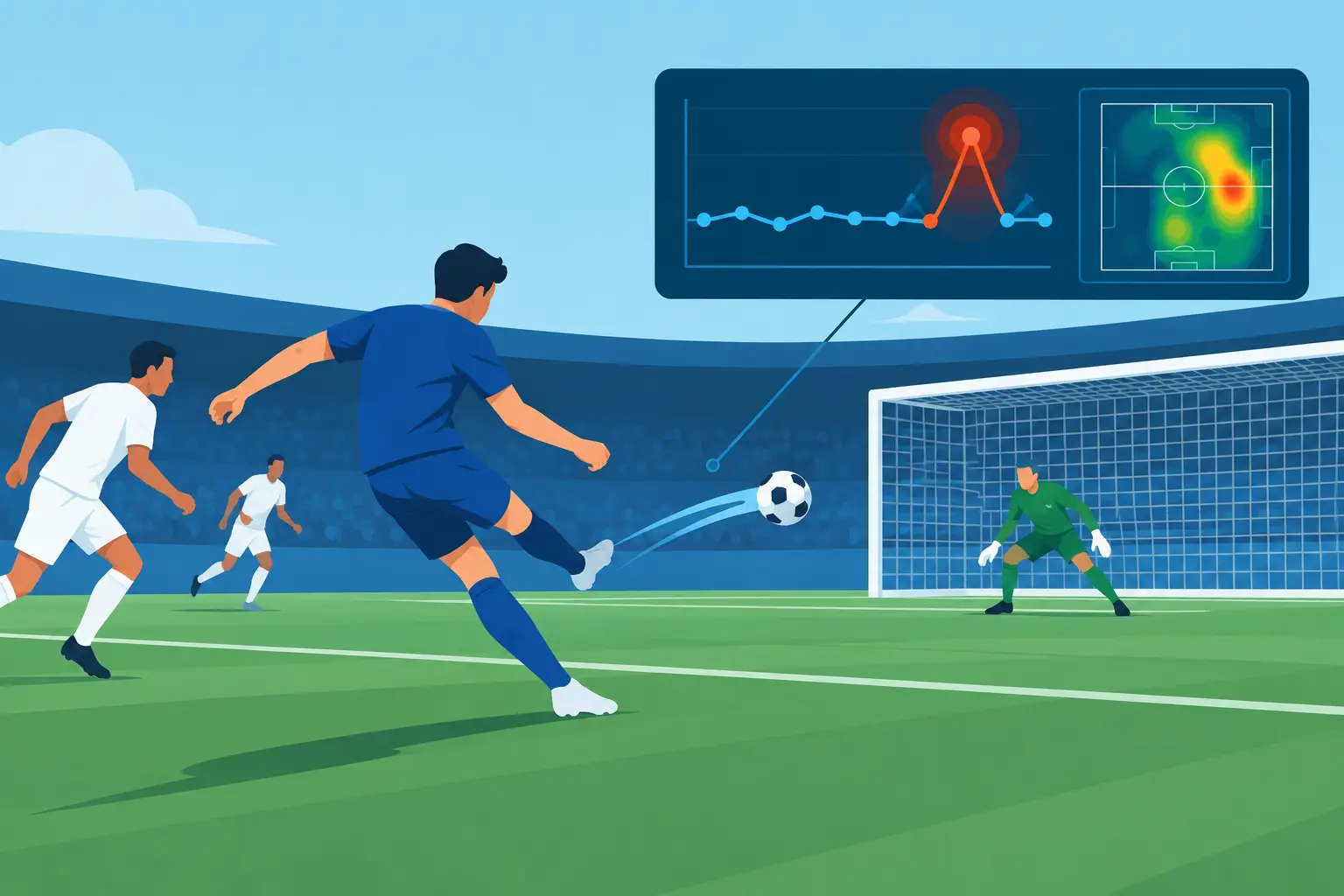
A scoreline can look calm while the match is anything but. A 0-0 game in the 63rd minute may suddenly feature repeated entries into the box, a rise in shots from dangerous areas, clearances piling up, and one team unable to keep the ball. Noticing that gap between the score and the pattern underneath it is what people mean by football scoring anomaly detection.
It is a useful way to watch football, and a genuinely hard thing to measure. This article is about how to read an unusual attacking phase, why so many of them come to nothing, and what separates a real shift from a spell that only looks like one.
What an unusual attacking phase looks like
An anomaly is not simply a team taking more shots than usual. Football is too variable for one statistic to carry the story. A match can produce fifteen harmless attempts and little real danger, while another turns on three sequences in two minutes.
The idea points at something departing from the expected rhythm of a match. A low-possession side producing several direct transitions in quick succession. A favourite dominating territory and suddenly conceding repeated set pieces. A late change of shape that alters where chances are created.
Context is what turns an event into a signal. A corner is normal. Four corners after sustained pressure, several blocked shots, and a goalkeeper forced into difficult saves may be something else. A red card is obvious; the less obvious question is how the following ten minutes change. Does the team with an extra player find width? Does the reduced side settle into a compact shape? Does the game open up, or become unexpectedly controlled?
Pressure is not the same as possession
Possession is informative and frequently misread. A team circulating the ball around midfield controls it without creating anything. Another side may see less of it and still arrive repeatedly in dangerous positions.
The distinction matters most late in matches. A team protecting a lead may concede possession deliberately and break into space. If the trailing side pushes numbers forward without producing clean final actions, the apparent momentum is misleading. If both sides are creating, the match may be genuinely unstable.
Timing changes the meaning of every signal
The same event carries different weight in the 12th minute and the 82nd. Early pressure may just be a planned opening. Late pressure is shaped by fatigue, substitutions, the scoreline, and changing risk tolerance.
A burst of attacking activity after a substitution may mean more than the same burst during a routine spell. A run of corners after conceding can signal urgency — or a defence deliberately giving up wide areas while protecting the centre.
Why more activity does not mean a goal
This is the part worth internalising, because it is where most readings go wrong. An unusual attacking phase raises the chance of a goal. It does not promise one, and the gap between those two statements is wide.
Plenty of phases that look decisive produce nothing. Shot counts inflate easily: blocked efforts from distance and speculative attempts from tight angles land in the same column as a clear opening. A team throwing bodies forward late concedes the shape that made it dangerous in the first place, so the pressure looks heaviest at exactly the moment the quality drops. Set-piece sequences can repeat without a single clean contact. A goalkeeper in form quietly resolves what the numbers record as sustained danger.
The opposite happens too. Quiet matches produce goals from a deflection, an error, or one moment of individual quality that no preceding pattern anticipated. Football distributes its goals unevenly across the phases that appear to deserve them, which is precisely why a dominant spell ending 0-0 feels unjust and happens constantly.
So the honest use of an unusual phase is as a prompt to look, not a forecast. It tells you this match has become more interesting than its scoreline suggests. What happens next is still football.
Where Sports Alert fits
There is no dedicated scoring-anomaly alert. The families that can reach you are goal alerts, corner alerts, card signals, and the Pressure Signal, and the closest to the idea above is the Pressure Signal.
It is observational: it reports activity that has already built up rather than forecasting what follows. The Pressure Signal compares how three counted events are moving for one side against the other over a rolling window — shots in the box, shots on target, and corners — and reports when one side is clearly ahead, within set minutes of the match and with a cooldown between messages. Possession is recorded but plays no part in whether it fires. That description is specific to the Pressure Signal; the goal, corner and card families run on their own rules, and match predictions are a separate feature in the app rather than something delivered by these alerts.
Which channel carries an alert depends on your plan. Push notifications are included on every plan, Email is included on Pro and Max, and Telegram and SMS are Max-plan channels, each needing a one-off setup step first — Telegram has to be linked to your account, and SMS needs a verified phone number and carries a monthly message cap. Every channel has its own toggle in your notification preferences, and alerts are sent for matches you follow, so following the fixture is what brings it into scope. The Telegram channel guide walks through that setup.
Reading the match underneath the score
Counted signals are most useful when attention is limited. On a crowded Saturday a fan may have five matches available and one screen, and the score alone will not tell you which has turned from routine to compelling.
They help with matches ordinary coverage overlooks, too. A scoreless league game becomes absorbing when one side starts working a weak side of the pitch. A 2-0 match regains urgency after a change of shape. And for a group of supporters it makes for better conversation: instead of saying a goal came from nowhere, you can go back and look at whether the pressure was already building.
The next time a scoreline looks ordinary, look at the rhythm underneath it. The most interesting thing in the match may already be building — and reading what it means is still the best part of watching. How those readings become a notification is covered in football pressure shift alerts for live fans.
See The Match Behind The Scoreline
Create an account to follow live matches and explore the alerts available on your plan.
Create Free AccountThis content is for informational and entertainment purposes only. Sports Alert provides match analysis based on statistical models and threshold rules. It is not betting advice, not financial guidance, and carries no guarantee of future outcomes. For more information, please see our Disclaimer.