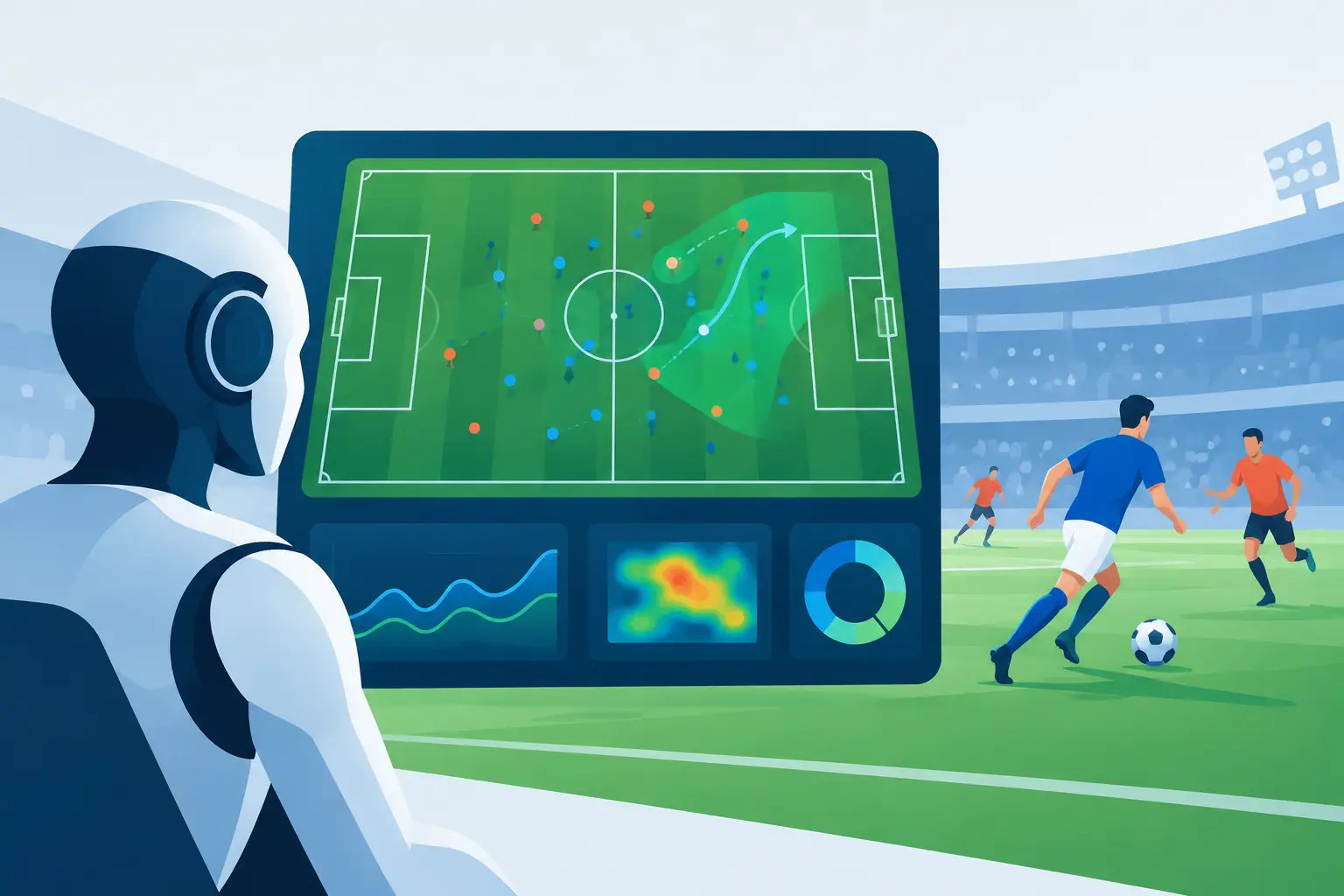
A score can stay 0-0 for 70 minutes and still tell two completely different stories. One match is balanced, cautious, and short on chances. In the other, one team has pinned its opponent deep, forced repeated clearances, created corner pressure, and started finding space between the lines. AI football match analysis is built to recognize that difference while the match is still moving.
For fans following several fixtures, watching from work, or using a second screen during a big weekend slate, the challenge is not finding more numbers. It is knowing which live signals matter now. Live analysis exists to turn the noise of a match into timely, understandable context.
What AI Football Match Analysis Actually Does
Live match analysis monitors the changing conditions of a game and translates them into match intelligence. Instead of presenting a static stream of possession figures, shots, and scores, it looks for relationships between events: sustained attacks, a sharp change in territory, repeated entries into dangerous areas, defensive instability, rising set-piece pressure, and momentum shifts.
The useful output is not a claim that a specific result will happen. Football does not work that way. A late goal can come from a single deflection, a red card can overturn a game plan, and even a dominant team can be denied by a goalkeeper having an exceptional night.
What live analysis can do is identify when the shape of a match has changed. It can tell you that the tempo is rising, that pressure is building, or that a previously quiet side is beginning to create credible attacking conditions. That is a more useful layer than a scoreline alone.
Sports Alert tracks dozens of in-match statistics for both teams, along with the signals derived from them, and refreshes live match data every few seconds. That cadence matters. A match can swing quickly after a substitution, a tactical adjustment, or a sequence of attacks that changes how both teams play.
From Raw Events to Live Match Context
A live football feed produces constant information, but individual events rarely explain the whole picture. One corner is normal. Five corners in a sustained spell, alongside territorial dominance and repeated final-third actions, may indicate a very different match state.
Models and threshold rules help connect those signals over time. They can compare what is happening now with earlier phases of the same game, recognize whether pressure is sustained rather than isolated, and detect deviations from a match's established rhythm. The result is a clearer answer to the question fans naturally ask: what is changing here?
Pressure is more than possession
Possession can be misleading. A team may circulate the ball safely in its own half while the opponent creates the more dangerous situations. Pressure analysis looks beyond who has the ball and considers where play is happening, how often attacks reach threatening zones, whether the defending team can progress out, and how frequently sequences end in corners, shots, or emergency defending.
This context is particularly valuable in matches where conventional commentary falls behind the action. By the time a broadcaster says one team is under pressure, the pattern may have been developing for several minutes. A live signal can bring that shift to the surface earlier.
Momentum needs a time window
Momentum is often used loosely, but it becomes more meaningful when it is tied to a defined run of play. A single shot does not establish momentum. A sequence of progressive attacks, defensive recoveries, final-third entries, and increasingly frequent set pieces might.
The key is avoiding overreaction. Good live analysis should not raise a signal for every minor fluctuation. It needs thresholds, context, and a view of whether a pattern is persisting. Otherwise, the fan receives a stream of noise instead of intelligence.
Match anomalies can change the conversation
Some of the most interesting live signals are the ones that do not fit the expected flow. A team with little possession may suddenly create repeated high-quality attacks. A favorite may be controlling the ball but failing to advance it into meaningful areas. A normally disciplined defense may start conceding chances from the same channel.
These anomalies do not guarantee what happens next. They do give fans a reason to look closer, switch to a fixture, or follow a developing tactical story with more attention.
From Analysis to Alerts
Analysis only matters if it reaches you while the pattern is still active, so Sports Alert turns these readings into pressure and momentum signals, shown as Radar in the app, and delivers them alongside goal, corner and card alerts as push notifications, with email on Pro and Max plans and Telegram or SMS on Max. How those notifications are built, and how to keep them useful rather than noisy, is the subject of live football momentum alerts that read the match.
The Tactical Layer Fans Usually Miss
Traditional match coverage is built around headline events: goals, cards, substitutions, and the final score. Those moments matter, but they are often the visible outcome of a tactical process that began earlier.
Consider a winger repeatedly isolating a fullback. At first, it may look like an ordinary attacking choice. If the same matchup produces deeper entries, rushed clearances, defensive fouls, and overloads at the back post, it becomes a developing match pattern. The score has not changed yet, but the tactical balance may have.
AI cannot replace the trained eye of a coach or analyst reviewing video frame by frame. It can, however, make the signals behind that story easier to spot in real time. For the average fan, that means less time searching through stats and more time understanding why a game feels different.
This is especially helpful when a substitution changes the tempo. A fresh striker may force a deeper defensive line. An extra midfielder may slow transitions and reduce the opponent's space. A red card can create a new tactical reality immediately. Threshold rules and models can recognize the statistical consequences of those changes without waiting for a post-match recap.
Where AI Analysis Has Limits
Trustworthy match intelligence should be clear about what it can and cannot do. Models rely on the quality and speed of incoming event data. Delayed data, unusual match conditions, or limited coverage details can affect how quickly a pattern is recognized.
AI also cannot fully measure everything that matters in football. A player carrying an injury, a manager's halftime message, poor field conditions, or an emotional crowd can influence a match in ways that are difficult to quantify. Context from watching the game still matters.
That is why intelligent alerts work best as a companion to the match, not a replacement for it. They highlight emerging conditions and give fans a faster route to the story. They are not betting advice, financial guidance, or guarantees about future outcomes.
Building a Better Live Football View
The strongest live-match experience combines score updates with interpretation. A goal tells you what happened. A pressure signal can explain what had been building. A Radar reading can show why a quiet fixture suddenly deserves attention. A tactical signal can reveal the contest underneath the headline events.
For fans, the practical benefit is control. You do not need to stare at a stats page or watch every minute of every fixture to stay connected to the action. You can set the level of attention that fits your day, then let meaningful match changes come to you.
When the next shift starts forming, better live analysis helps you see more than the score and notice the match before the key moment unfolds.
See the Match Before the Key Moment
Create an account to follow live matches and explore the alerts available on your plan.
Create Free AccountThis content is for informational and entertainment purposes only. Sports Alert provides match analysis based on statistical models and threshold rules. It is not betting advice, not financial guidance, and carries no guarantee of future outcomes. For more information, please see our Disclaimer.